

3 Knee Strengthening Exercises Every Athlete Should Do for Long-Term Resilience
Build stability, control, and confidence in your knees with three simple, high-impact exercises for prehab and longevity.
Why Knee Weakness Steals Your Confidence
If you’ve ever felt your knee wobble during a landing… hesitated on a cut… or second-guessed a deep squat you used to own without thinking, you’re not alone.
Knee instability is one of the most common issues I see in athletes, movers, and weekend warriors. Sometimes it shows up after an injury. Other times it sneaks in after a long break or a few months of inconsistent training. The result is always the same:
You don’t fully trust your knee anymore.
As a Doctor of Physical Therapy working with movement artists and athletes, I’ve seen this pattern over and over. What solves it? Smart prehab movements that build strength, control, and resilience before things break down.
Today, I’ll walk you through 3 knee-strengthening exercises I give my athletes to rebuild confidence from the ground up.

Why Stability Matters
When your knee can’t stabilize through lateral motion, rotation, or single-leg loading, your body compensates. That leads to:
nagging pain
sloppy landings
loss of power
hesitation that kills flow and confidence
increased risk of bigger setbacks later
Most athletes only train forward/back patterns. But your knee needs to handle side-to-side, rotational, and single-leg deceleration if you want to move powerfully and safely.
These exercises hit all three.
#1 - Cossack Squat Progression
Start Here: Lateral Lunge
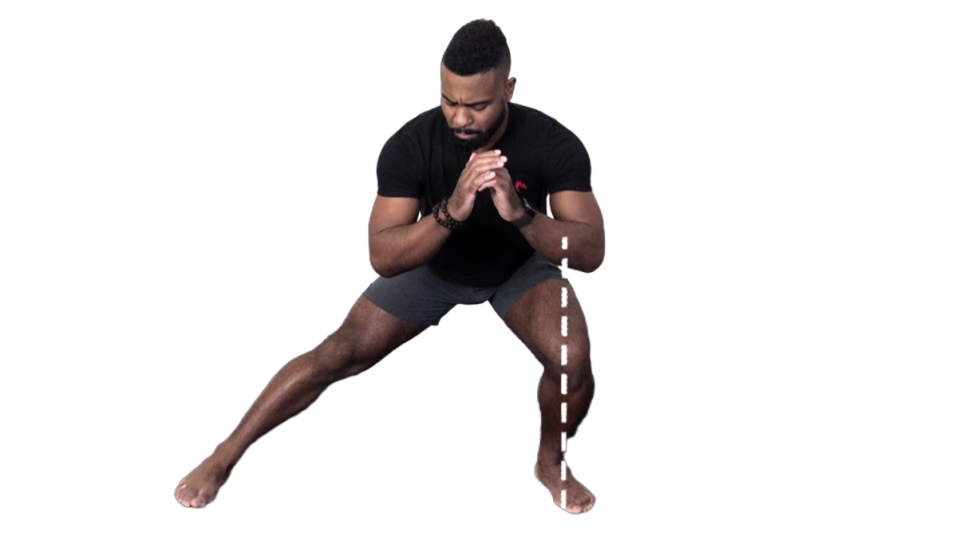
Begin with a wide base of support (wider than shoulder width)
Shift your weight to one side and squat down while keeping the other leg straight
Keep your supporting knee tracking over your toes
Push evenly through your foot to rise
Increase depth slowly over time
This builds foundational lateral hip and knee strength and groin mobility.
Progress to: Cossack Squat
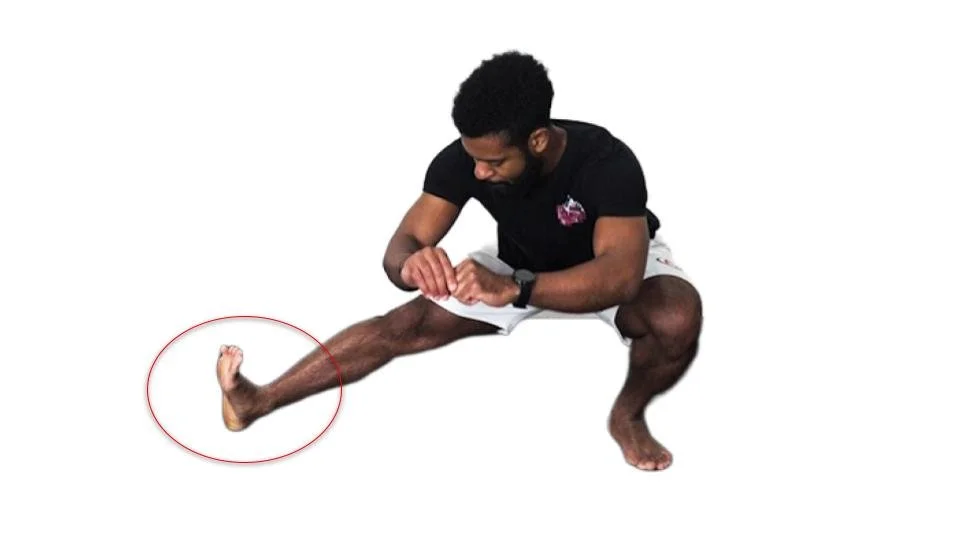
Once your range feels controlled, move into the full Cossack squat:
Sink deeper while staying tall
Keep the heel of your supporting leg down
The opposite leg will remain straight. As you descend, allow this hip to open so that your toes face upwards
Use a weight to challenge yourself further
Focus on increasing depth before increasing weight
Why it matters:
Athletes rarely train through a full range of motion. Doing so bulletproofs your body by strengthening joints, ligaments, and tendons.
Tip: Pause for a full 1–2 seconds at your weakest point.
#2 - weighted windmill
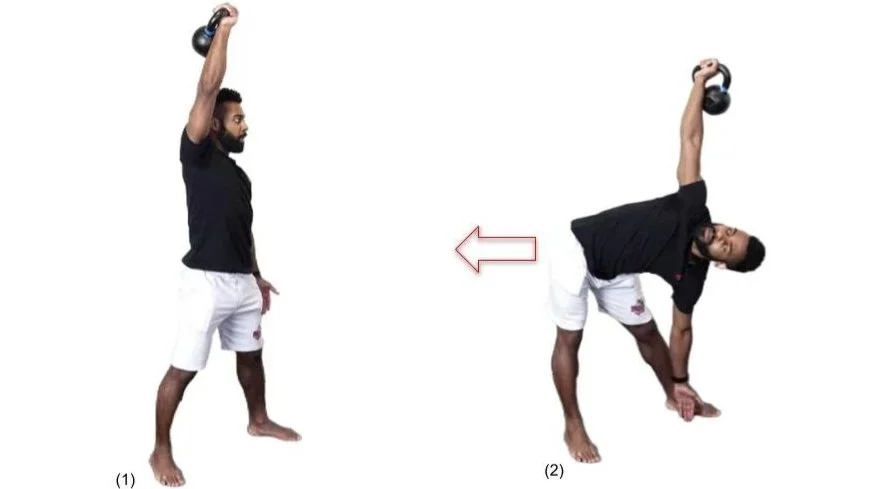
1 - Starting position
2 - Focus on pushing hips back as you rotate towards the ceiling
In both everyday and athletic movements, your knee often has to stabilize while the rest of your body rotates. The KB windmill challenges:
balance
hip hinge control
lateral strength
knee stability under rotation
How to do it:
Start with a very light kettlebell or dumbbell overhead
Keep your front knee soft but grounded
Hinge at the hip to reach toward the floor
Avoid collapsing into the inside of the foot
Move slowly and controlled
Why it matters:
Rotation is where knee control usually breaks down. This movement teaches your knee to stay strong while your torso moves through multiple planes.
Tip: Keep your eyes on the kettlebell the entire time for extra stability.
#3 - Weighted Pause Lunge
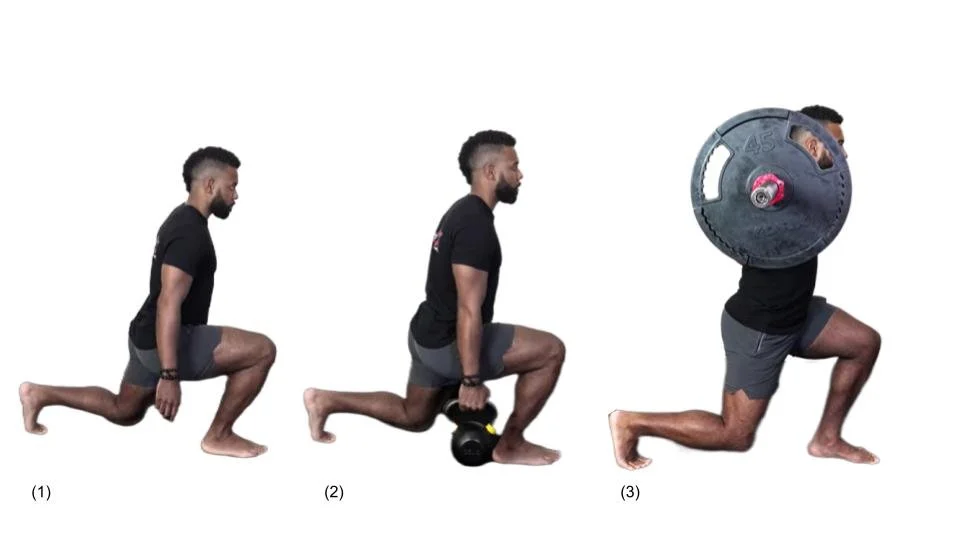
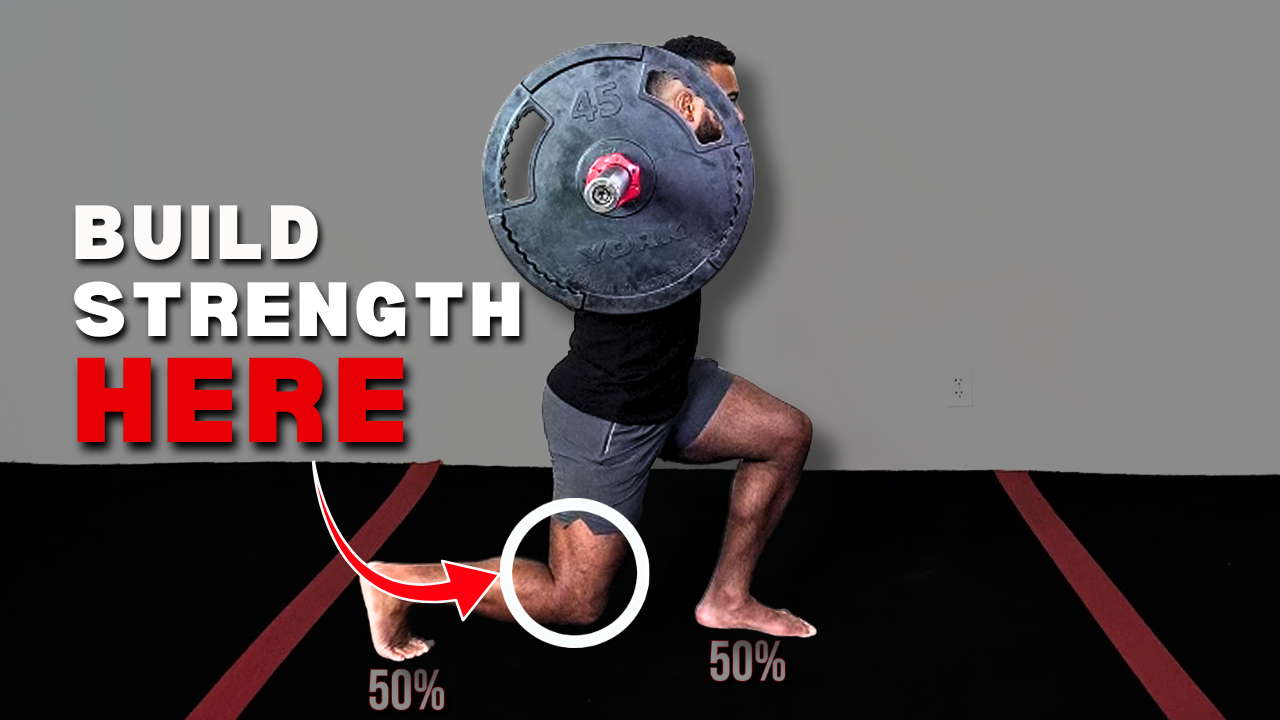
Progression (Focus on 50/50 weight distribution):
1 - Bodyweight
2 - Handheld (KB, DB)
3 - Barbell
Want strong, confident knees? Train single-leg loading that forces control.
The paused barbell lunge builds:
tendon strength
knee position awareness
deceleration power
foot + ankle stabilization
How to perform:
Step back into a lunge
Lower slowly
Pause at the bottom for 1–2 seconds
Keep the torso tall
Push evenly through both feet to return
The pause eliminates “cheating” and builds genuine knee capacity.
Tip: Use moderate load (enough to challenge you, not enough to affect your form).
Sample Program (6 Weeks)

Week 1–3
Lateral Lunges: 3×8/side
KB Windmill (light): 2×6/side
Bodyweight/KB Lunges with Pause: 3×6/side
Week 3–6
Cossack Squat Loaded: 3×6/side
KB Windmill (moderate): 3×5/side
Barbell Lunges with Pause: 3×5/side
Do this routine 1-2 times each week for best results.
Quick Tips for Consistency
✅Add lateral lunges or cossack squats to every warm-up
✅Add pauses to your lifts this week
✅Try barbell lunges instead of squats
Common Mistakes
❌ Collapsing the knee inward → Fix: think “track over toes.”
❌ Rushing the movement → Fix: use a 2–3 second pause.
❌ Too heavy too soon → Fix: stability and range first, load second.
❌ Only training sagittal plane → Fix: train lateral + rotational weekly.
Watch the Video Walkthrough
In this video, I break down each drill’s purpose, cues, and progression so you can train with confidence.
Building knee resilience isn’t complicated, it just requires the right exercises trained with intention. Add these three movements to your weekly routine and you’ll start feeling stronger, more stable, and more confident in how you move.
If you're ready for structured help, customized programming, and accountability, schedule a free discovery consultation, and we would be happy to work with you 1:1.
Author Bio

I’m Dr. Neil Toussaint, an Atlanta based Doctor of Physical Therapy, tricking athlete, and founder of TrickStrong | Performer’s Edge. I’ve spent decades helping athletes and movement artists rebuild strength, stability, and trust in their bodies. The movements above come straight from the same progressions I use with clients every day.
